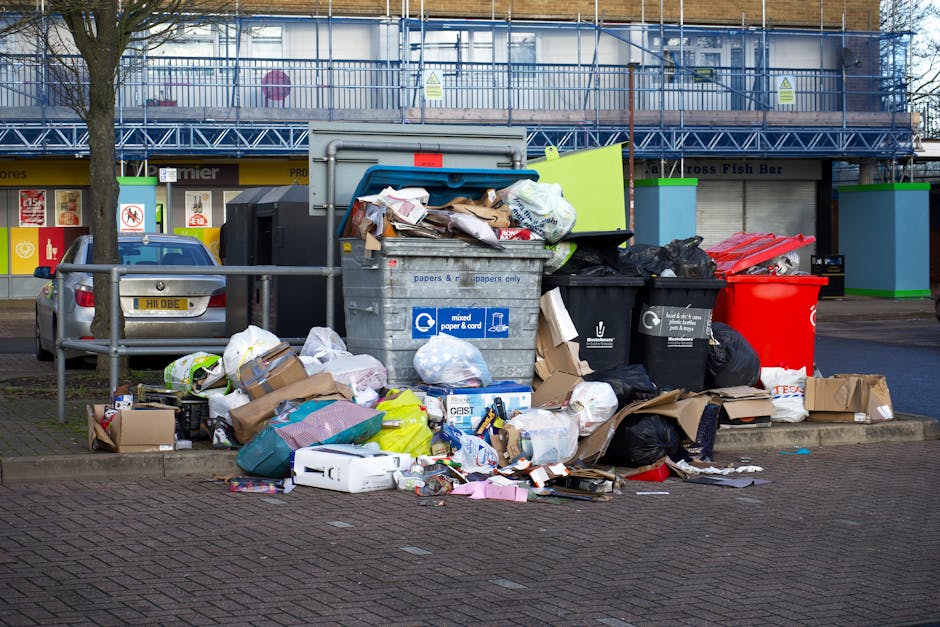
Enfield Council limits: Brimsdown disposal rules
If you are sorting a clear-out in Brimsdown, the rules can feel annoyingly specific. One minute you are dealing with a broken wardrobe, the next you are wondering whether a mattress, fridge, paint tins, or a bag of mixed household junk is actually allowed. That is where understanding Enfield Council limits: Brimsdown disposal rules really helps. It saves time, avoids rejected collections, and reduces the chance of fines or awkward last-minute re-sorting.
To be fair, most disposal problems in Brimsdown come down to the same thing: people mixing ordinary household waste with bulky items, specialist waste, or recyclable materials that should be handled differently. This guide breaks it all down in plain English, with practical steps, common mistakes, and a few local tips that can make the whole process less stressful. If you are planning a move, decluttering before one, or just clearing a flat after years of accumulated bits and pieces, you will find something useful here.
For anyone preparing a bigger move, it also helps to think about the wider process. A well-planned declutter often goes hand in hand with clearing out before you move, careful packing and preparation, and sometimes even arranging same-day removals in Brimsdown when time is tight.
Table of Contents
- Why Enfield Council limits: Brimsdown disposal rules matters
- How Enfield Council limits: Brimsdown disposal rules works
- Key benefits and practical advantages
- Who this is for and when it makes sense
- Step-by-step guidance
- Expert tips for better results
- Common mistakes to avoid
- Tools, resources and recommendations
- Law, compliance, standards, or best practice
- Options, methods, or comparison table
- Case study or real-world example
- Practical checklist
- Conclusion
- Frequently asked questions
Why Enfield Council limits: Brimsdown disposal rules Matters
These rules matter because waste is not just waste. Some items are safe to collect in standard household bins or scheduled collections, while others need extra care because of size, material, contamination, or safety risk. A sofa left in the wrong place, a broken appliance dumped with general rubbish, or paint hidden inside a mixed sack can all create problems. Sometimes the collection is refused. Sometimes the item is left behind. And sometimes you end up spending more time fixing the mistake than you would have spent doing it properly in the first place.
Brimsdown has its own practical pressures too. Flats near stations, houses with limited frontage, and business premises around industrial areas can all make access awkward. If you are trying to get rid of bulky furniture, you may already be thinking about access routes, parking, and stairwells. In those situations, disposal rules and moving logistics overlap quite a bit. A good example is someone clearing a one-bedroom flat and discovering that the bed frame, mattress, and old chest of drawers need different handling. Not glamorous, but very real.
There is also a strong cost angle. If you separate items correctly, you are more likely to use the right collection method first time. That can help avoid repeat charges, extra lift-and-carry time, or emergency arrangements. And yes, it usually means less clutter sitting in the hallway while everyone gets fed up with it. Which, let's be honest, happens faster than people expect.
If your clear-out is part of a house move, planning early can make the entire move feel calmer. Many people find that reading about stress-free home moves helps them see the disposal stage as part of the bigger picture rather than a separate chore.
How Enfield Council limits: Brimsdown disposal rules Works
The basic idea is simple: different waste streams follow different rules. Ordinary household rubbish is one thing. Recyclable items are another. Bulky waste, electrical items, and hazardous materials often need different handling again. The limits usually relate to how much you put out, how it is presented, and whether the item belongs in a council collection at all.
What usually falls within normal household disposal
- Everyday black-bag waste
- Clean dry recycling, where accepted
- Small items that fit the usual household waste system
- Packaging from decluttering or moving, if sorted correctly
What often needs separate attention
- Large furniture and bulky household items
- Fridges, freezers, washing machines, and other appliances
- Mattresses and bed bases
- Paint, chemicals, and other potentially hazardous household waste
- Mixed loads containing recyclable and non-recyclable items together
It also helps to understand that councils tend to care about presentation as much as content. In plain terms, a tidy, separated, and sensible pile is much easier to deal with than a chaotic one. A sofa with cushions removed, drawers emptied, and no loose rubbish stuffed inside is far more likely to go smoothly than a bundle of random stuff tied together with hope and string. Hope and string are not a strategy.
For heavier or awkward items, you may need more than a bin-side solution. That is where local support such as bulky item removal options in Brimsdown can be useful, especially when a standard council route is not practical.
Key Benefits and Practical Advantages
Following the correct disposal rules gives you more than compliance. It also makes the whole clear-out cleaner, safer, and calmer.
- Less chance of rejection: If items are sorted properly, collections are less likely to be refused.
- Better safety: Sharp, heavy, or hazardous items are handled more responsibly.
- Cleaner rooms and hallways: A good sort reduces the pile-up effect during a move.
- Lower stress: You avoid the last-minute panic of not knowing what goes where.
- More efficient moving day: Removal crews can focus on lifting and transport rather than sorting through waste.
- Better recycling outcomes: Reusable and recyclable items are less likely to end up mixed with general waste.
There is a practical knock-on benefit too. When you are already dealing with boxes, tape, and a stairwell that seems to have grown narrower overnight, simple disposal decisions matter. If you have pre-sorted your unwanted items, the move feels oddly easier. Not magical. Just more manageable.
People often underestimate how much time gets eaten by the awkward bits: old furniture, broken shelving, left-behind packaging, freezer contents, or that pile of mixed odds and ends from under the bed. If you want to reduce that drag, it helps to read a little around the subject, such as move-out cleaning strategies and how to avoid hidden fees on removal quotes.
Who This Is For and When It Makes Sense
This is not just for people doing a full house clear-out. In practice, the rules matter to a lot of Brimsdown residents and businesses.
It makes sense if you are:
- moving home and need to dispose of unwanted furniture
- clearing a flat with limited storage space
- emptying a student room at the end of term
- replacing large appliances
- tidying up after a long period of storage
- closing or reorganising a small office
- dealing with a same-week move and a tight deadline
For student moves, the challenge is usually volume rather than complexity. A few bags, a desk chair, maybe a mattress topper, and suddenly it becomes a proper disposal job. For families, it is often the opposite: more items, more weight, more decisions. For offices, it is not uncommon to have old desks, monitors, boxes of paperwork, and broken chairs all showing up at once. Different problem, same need for a sensible plan.
If you are not sure where your situation fits, it can help to think in terms of size, material, and risk. Small clean items usually behave. Big, mixed, or hazardous ones usually do not.
There is also a local logistics angle. Brimsdown station flats, roads like Brimsdown Lane, and busier industrial-estate access points can make quick roadside sorting or van loading a bit fiddly. In those cases, planning disposal alongside transport can save you from doing everything twice.
Step-by-Step Guidance
Here is a straightforward way to approach disposal without overcomplicating it.
- Walk through the property room by room. Do not start with the biggest item first. Start with the stuff you can remove quickly. It gives you momentum.
- Separate items into clear groups. Keep general waste, recycling, reusable items, bulky items, and hazardous items apart.
- Check for hidden contents. Empty drawers, cupboards, under-bed storage, and appliance interiors. People miss this more often than you would think.
- Decide what needs council collection and what needs another route. A mattress may be suitable for a bulky collection, while paint or chemicals may need a different disposal path.
- Break down what you can safely dismantle. Flat-pack furniture, bed frames, and shelving often become much easier to move once reduced in size.
- Keep clean recyclables clean. Cardboard should be dry and free from food residue. Mixed contamination causes problems.
- Arrange loading access in advance. Think about parking, stairs, lift access, and whether the item can be carried through narrow hallways.
- Set a final sweep time. Leave a short window before collection or removal to catch overlooked bits and pieces.
That final sweep is underrated. It is the moment when you find the forgotten cables, the lonely shoe, the half-empty cleaning spray, and the one kitchen drawer full of miscellaneous chaos. Every home has one. Every home.
If a bulky item is proving awkward, you may also find it useful to review simple ways to move a bed and mattress or the risks of DIY piano moving before attempting anything heavy on your own.
Expert Tips for Better Results
Small choices make a surprisingly large difference. In our experience, the best disposal outcomes come from a calm, structured approach rather than a heroic all-at-once clear-out.
- Use separate piles or labels. "Keep", "donate", "recycle", "bulky", and "special disposal" are enough for most homes.
- Move dangerous items to one safe corner. Keep sharp, wet, or chemical items away from children, pets, and anything fabric-based.
- Remove batteries early. Small electronics often contain batteries that should not just be thrown together with general waste.
- Photograph awkward items before arranging collection. That helps if you later need to explain size, condition, or access issues.
- Protect floors and corners. Old furniture often leaves marks when dragged, especially in tight Brimsdown hallways or stairwells.
- Plan around building rules. Flats can have bin-area limits, lift rules, or loading windows that affect disposal timing.
A small bit of practical human advice: if an item already feels like a problem while you are standing still, it will not magically become easier on moving day. Deal with it earlier. Your future self will be grateful, probably while drinking tea in a half-empty kitchen.
Some items are best handled with specialist support. A heavy wardrobe, a fragile piano, or an overloaded freezer is not the place for improvisation. If that is your situation, the right move is usually to combine disposal planning with professional lifting support, such as advice from solo heavy-lifting techniques and the service information on insurance and safety.
Common Mistakes to Avoid
Most disposal problems come from a few predictable mistakes. The good news is that they are easy to avoid once you know what to look for.
- Mixing hazardous items with normal waste. Never assume paint, solvents, or unknown liquids can be treated like bagged rubbish.
- Leaving items half-dismantled. A loose bed frame with sharp fittings can be harder, not easier, to deal with.
- Forgetting about weight limits. A single item may be manageable; a full pile of them might not be.
- Not checking access first. The item may fit the rules but still not fit through the stairwell. Classic problem.
- Waiting until the last day. Disposal is the sort of task that seems small until it suddenly becomes urgent.
- Using the wrong collection method for appliances. White goods often need extra care because of size and internal components.
- Assuming everything recyclable is accepted in the same way. Local guidance can vary by item type and condition.
One particularly common issue is the "I'll just leave it beside the bin" approach. That may feel convenient, but it often creates more friction than it solves. It can block access, look untidy, and delay collection. A better plan is always to know the collection point, timing, and item type before you move anything outside.
Tools, Resources and Recommendations
You do not need much to handle disposal well, but a few tools make the job cleaner and safer.
- Gloves: Useful for glass, screws, splinters, and dirty edges.
- Strong bin bags or rubble sacks: Better for robust household waste and small breakables.
- Tape and marker pen: Handy for labelling piles or securing loose drawers.
- Basic screwdriver set: Often enough to dismantle shelving, bed frames, and flat-pack furniture.
- Blankets and straps: Useful if items need to be moved through a hallway or loaded into a van.
- Phone camera: Simple, but very useful for recording item condition and access challenges.
For larger clear-outs, it can help to combine disposal planning with moving support. The pages on removals in Brimsdown, removal services, and furniture removals are helpful if you are trying to coordinate items that are both unwanted and too bulky to handle alone.
If you are storing items temporarily while you decide what stays, storage in Brimsdown can also be a sensible bridge between decluttering and final disposal. That is often better than rushing into a bad decision.
Law, Compliance, Standards, or Best Practice
Without turning this into a legal seminar, it is worth saying that waste must be handled responsibly. The practical principle is straightforward: do not dump items where they should not go, do not mix hazardous waste into general waste, and do not assume a council collection covers everything by default.
In UK practice, the main best-practice themes are:
- Duty of care: Waste should be passed to someone who is authorised and able to handle it properly.
- Segregation: Different waste types should be separated where required.
- Safe presentation: Items should be accessible and not create avoidable hazards.
- Correct disposal route: Bulky waste, electricals, and hazardous items may need separate handling.
The safest general approach is to follow local council guidance as closely as possible, but if something is unclear, treat it as a special case rather than guessing. That is especially true for fridges, freezers, chemicals, and anything with fuel, fluid, or batteries. Guessing is cheap, but the consequences can be irritating.
For environmentally responsible disposal choices, it is also worth thinking about reuse and recycling before outright disposal. The site's recycling and sustainability information fits well with that mindset.
Options, Methods, or Comparison Table
Different disposal methods suit different situations. Here is a simple comparison to help you decide what makes sense.
| Method | Best for | Pros | Limits |
|---|---|---|---|
| Regular household collection | Everyday rubbish and accepted recyclables | Simple, familiar, low effort | Not suitable for bulky or specialist items |
| Bulky waste collection | Furniture, mattresses, large household items | Convenient for larger objects | May have item-type and presentation rules |
| Specialist disposal route | Appliances, hazardous waste, certain mixed materials | Safer and more compliant | Requires more planning |
| Professional removal service | Mixed clear-outs, awkward access, urgent moves | Less lifting, less stress, faster loading | Costs more than doing everything yourself |
| Storage before disposal | When you are undecided or staging a move | Buys time and keeps things tidy | Not a disposal solution by itself |
If your home has lots of furniture or awkward access, professional help can be the cleaner option. It is not just about lifting. It is about avoiding damage, delays, and the slow misery of trying to wrestle a sofa through a stairwell that clearly hates you.
For access-heavy jobs, local guidance like parking tips for the industrial estate, Brimsdown station flat access, and best van routes for Innova Park removals can make a real difference.
Case Study or Real-World Example
Here is a very typical Brimsdown scenario. A couple moves out of a two-bedroom flat and realises, three days before handover, that they have a broken chest of drawers, an old mattress, two monitors, a freezer full of forgotten food, and a pile of cardboard from recent purchases. None of it is outrageous on its own. Together, it becomes a bit of a mess.
What worked well in that case was simple:
- cardboard was flattened and kept dry
- the freezer was emptied and defrosted early
- electronics were separated from general waste
- the mattress and drawers were grouped as bulky items
- one final room-by-room sweep caught loose cables and packaging
The biggest win was not speed. It was order. Once the items were separated, the choices became clearer: what could go, what needed special handling, and what could be loaded efficiently. The family avoided an end-of-tenancy panic, and the flat looked far better by collection day.
If you are in a similar position and the clutter is spreading faster than expected, that is usually the moment to get practical help rather than soldiering on alone. A dependable man with a van in Brimsdown or man and van support can make mixed clear-outs much easier to manage.
Practical Checklist
- Identify which items are general waste, recycling, bulky waste, or special waste
- Empty all drawers, cupboards, and appliance interiors
- Flatten cardboard and keep it dry
- Remove batteries where appropriate
- Separate sharp, wet, or hazardous items immediately
- Confirm access, parking, and collection timing
- Break down furniture safely where possible
- Keep one final bag for odds and ends
- Photograph any unusual items before collection
- Book extra support if an item is too heavy, large, or awkward for one person
A simple checklist sounds basic, but it prevents the classic "we forgot the thing behind the door" problem. And there is always a thing behind the door.
For jobs where weight and handling are the issue rather than just disposal, reading about smarter lifting techniques can also be surprisingly useful.
Get a free quote today and see how much you can save.
Conclusion
Brimsdown disposal gets much easier once you stop treating everything as one pile. Enfield Council limits: Brimsdown disposal rules are really about separating ordinary waste from items that need a different path, then presenting everything cleanly and sensibly. That protects you from rejected collections, reduces stress, and makes moving or clearing out far less chaotic.
If you remember only one thing, make it this: sort early, separate clearly, and do not leave bulky or hazardous items until the last minute. That one habit saves more hassle than most people realise. A little planning goes a long way, and in a busy place like Brimsdown, that is often the difference between a smooth day and a messy one.
And if the job feels too big to do neatly on your own, that is fine too. Some clear-outs need a bit of help, and there is no shame in making the sensible call. Better calm than chaos, every time.
Frequently Asked Questions
What are Enfield Council limits: Brimsdown disposal rules in simple terms?
They are the practical limits that determine what can go in normal household waste, what needs recycling, what counts as bulky waste, and what needs special disposal. The key is not to mix everything together and hope for the best.
Can I leave a sofa out for collection in Brimsdown?
Usually only if it is being collected through the correct bulky waste route and presented in the way required. Leaving furniture by the kerb without checking the rules can cause refusal or delay.
Do mattresses count as bulky waste?
In most cases, yes. Mattresses are typically treated separately from ordinary household rubbish because of their size and handling needs. They should be kept dry and free from loose rubbish.
Can I put electrical items in general rubbish?
No, not usually. Electrical items should be separated and handled according to the appropriate disposal route, especially if they contain batteries or refrigerant.
What should I do with paint tins and leftover chemicals?
Treat them as special items, not ordinary waste. Keep them upright, sealed if possible, and separate from other rubbish until you know the correct disposal route.
How do I know if an item is too heavy to move myself?
If you cannot lift it comfortably, cannot see where your feet are going, or need to twist to get it through a doorway, it is probably too heavy to handle casually. Weight, size, and awkward shape all matter.
Can I mix cardboard with household rubbish if I am moving house?
You can, but you should not if it can be avoided. Flattened, dry cardboard is usually much easier to handle as a separate recyclable stream.
Is it better to dispose of items before or after I move?
Before, if possible. Clearing out early reduces packing, saves space, and prevents unnecessary transport of things you do not want anymore. After the move can work, but it often creates extra clutter.
What if I have too much waste for one collection?
Split it into categories, check whether any items need separate disposal, and consider professional help if the volume or weight is getting out of hand. That is usually the neatest solution.
Do flat moves in Brimsdown make disposal harder?
Often, yes. Stairs, narrow corridors, shared entrances, and limited parking can all make bulky disposal more complicated. Planning access early saves a lot of frustration.
Can a removal team help with disposal and not just transport?
Yes, many people use removal support when the job includes bulky items, mixed waste, or awkward access. It is especially useful when disposal and moving are happening at the same time.
What is the biggest mistake people make with disposal rules?
Waiting too long and then guessing. That usually leads to mixed piles, wrong presentation, or items being left behind. A little sorting early solves most of it.